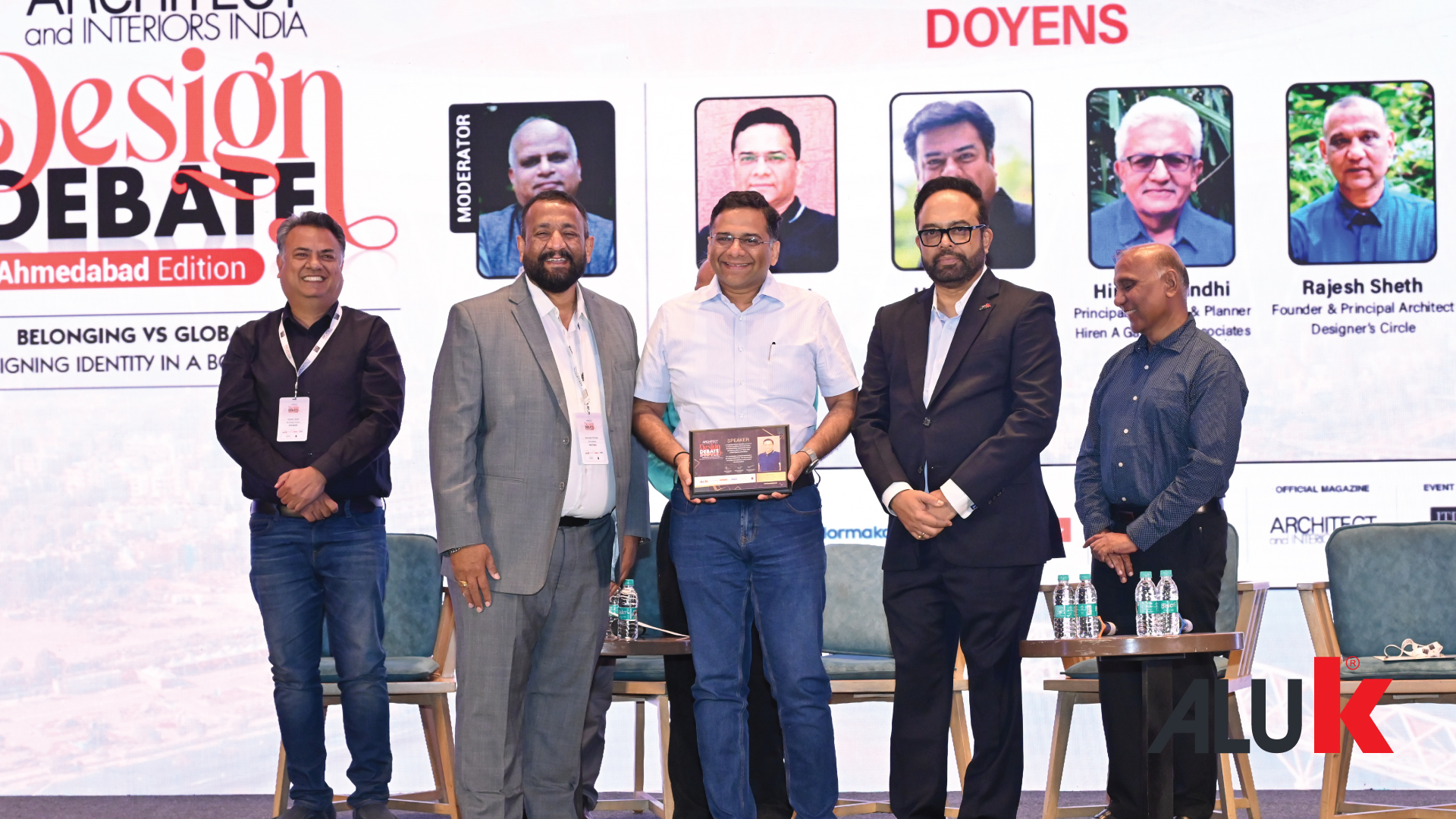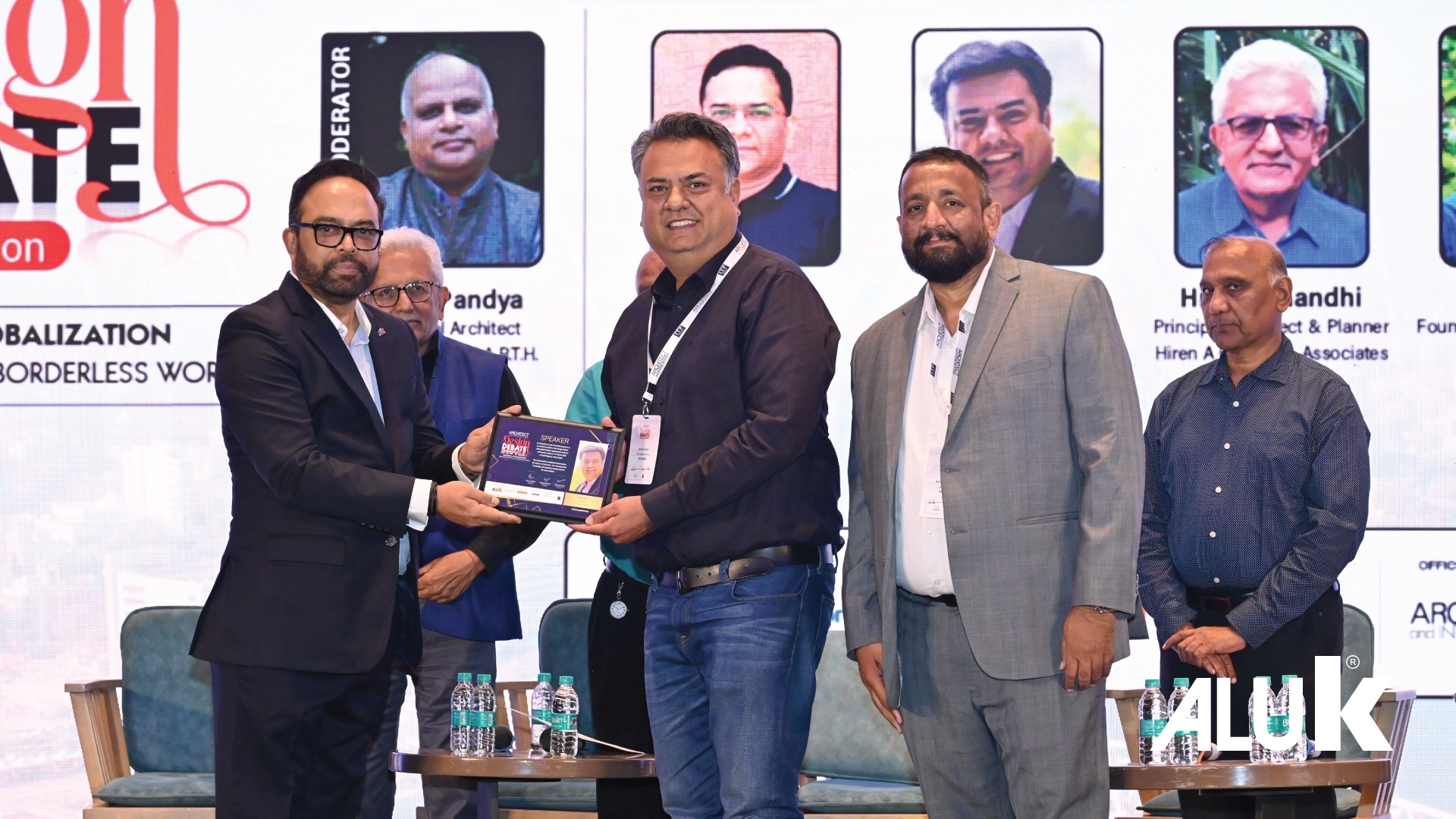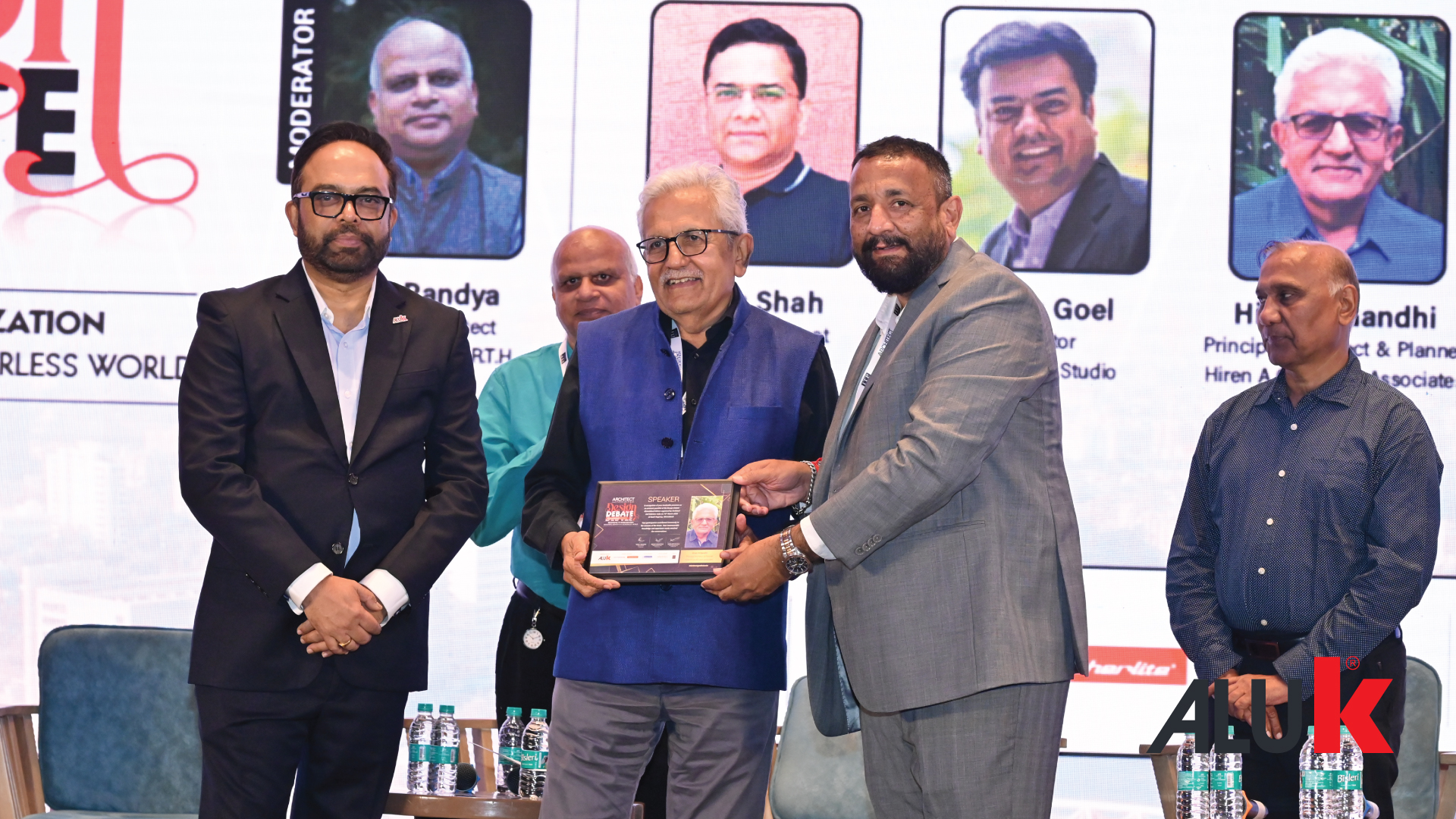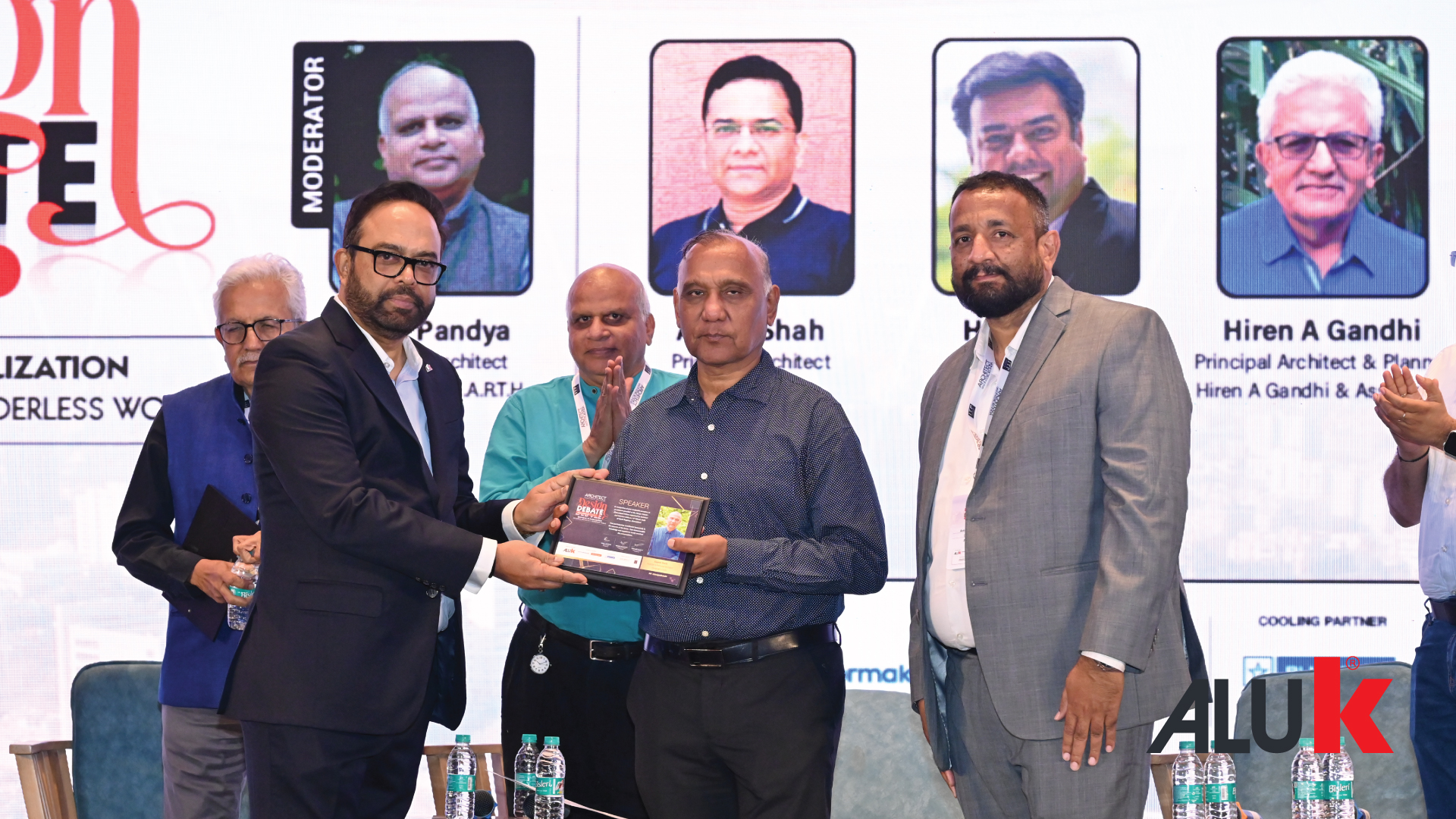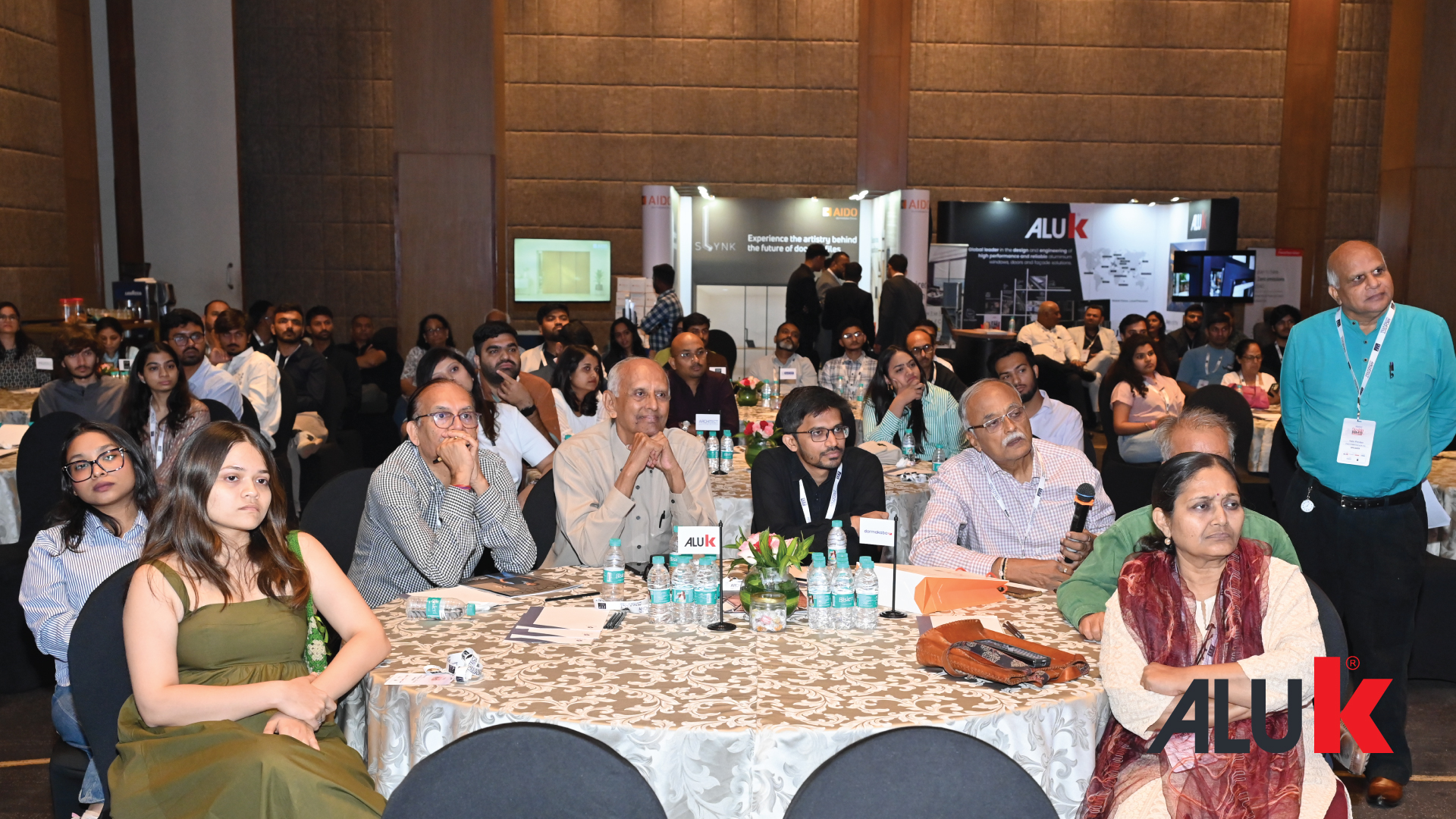
As architecture continues to operate within an increasingly global ecosystem of ideas, technologies, and aesthetics, the question of how buildings retain a sense of place has become more relevant than ever. On March 14, 2026, this dialogue unfolded at the Architects & Interiors Design Debate – Ahmedabad Edition, where AluK partnered the event to explore the theme “Belonging vs Globalization: Designing Identity in a Borderless World.” Held at Hyatt Regency Ahmedabad, the gathering brought together leading architects and emerging practitioners to examine how contemporary design negotiates cultural identity in an era of global exchange.
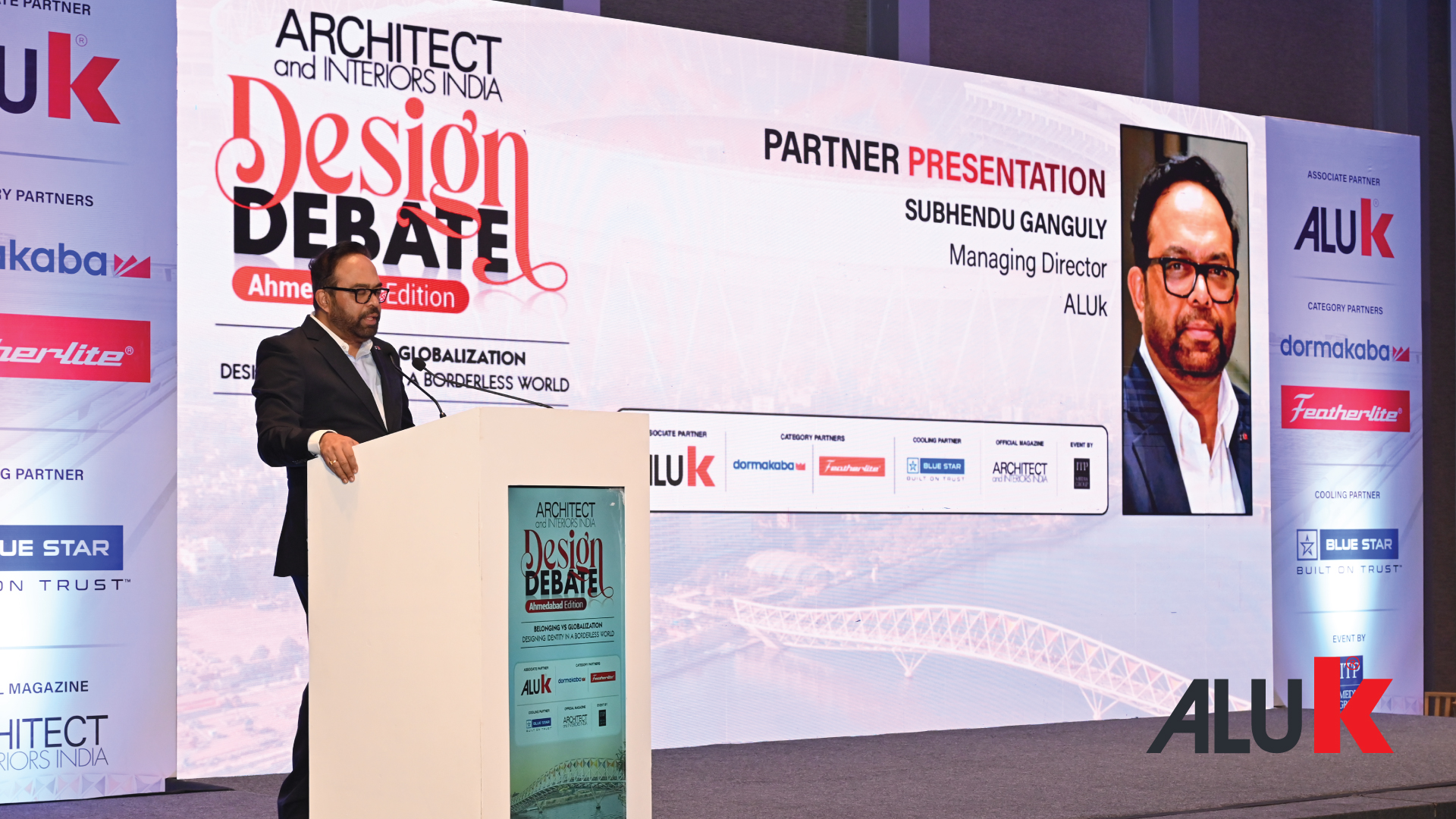
The evening featured a presentation by Mr. Subhendu Ganguly, Managing Director of AluK India, who addressed the gathering with insights on the evolving role of high-performance aluminium systems in shaping contemporary architecture. His presentation highlighted how façade and window/door technologies can enable architects to achieve global standards of performance while remaining responsive to local climate, culture and material expression.
The debate addressed a reality confronting architects across rapidly urbanizing cities: while global influences shape design thinking, architecture ultimately remains anchored in context, climate, materiality, urban morphology, and cultural memory. The evening’s discussions therefore moved beyond stylistic concerns, focusing instead on how architectural practice can reconcile international design aspirations with the specificity of place.
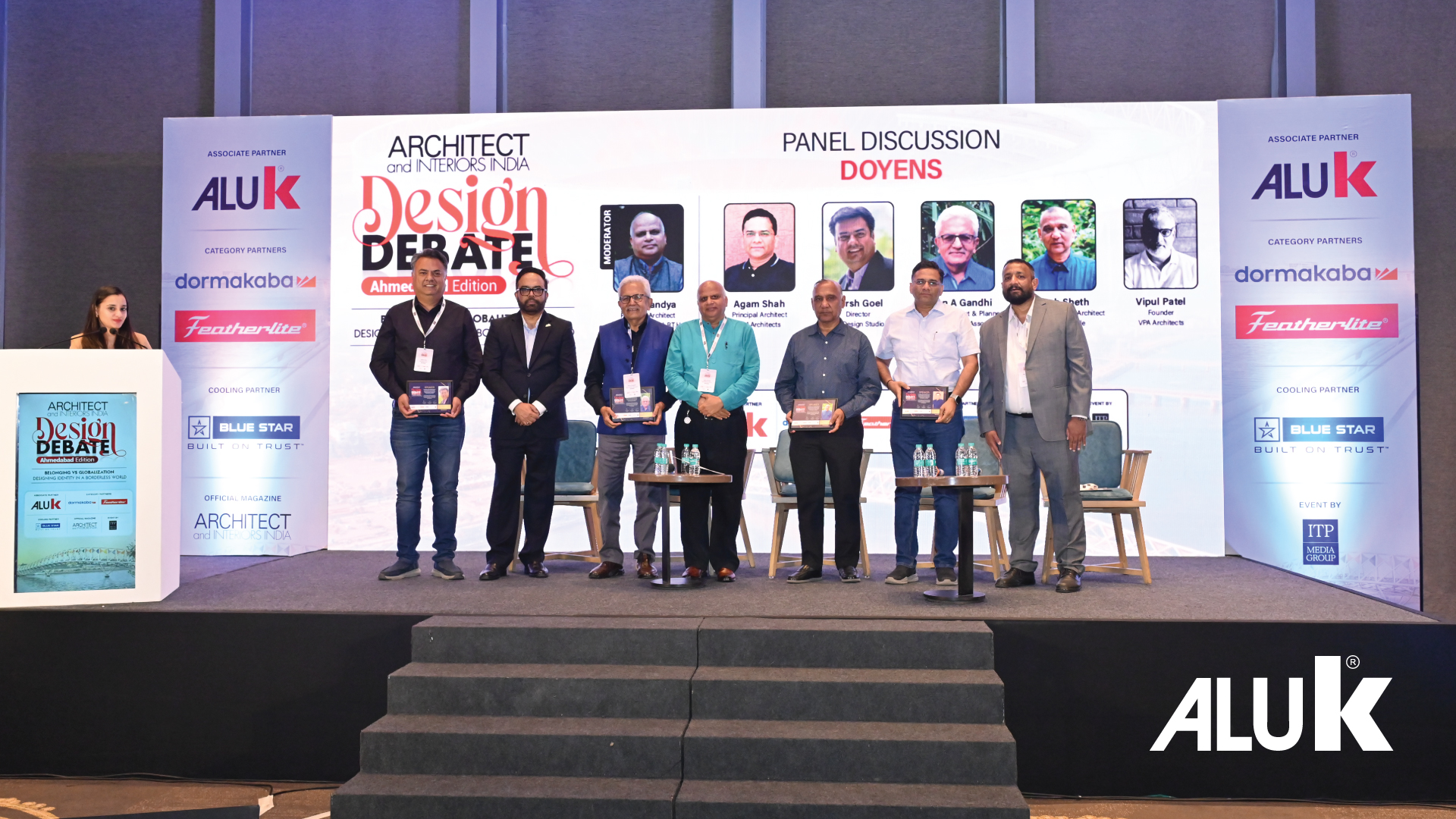
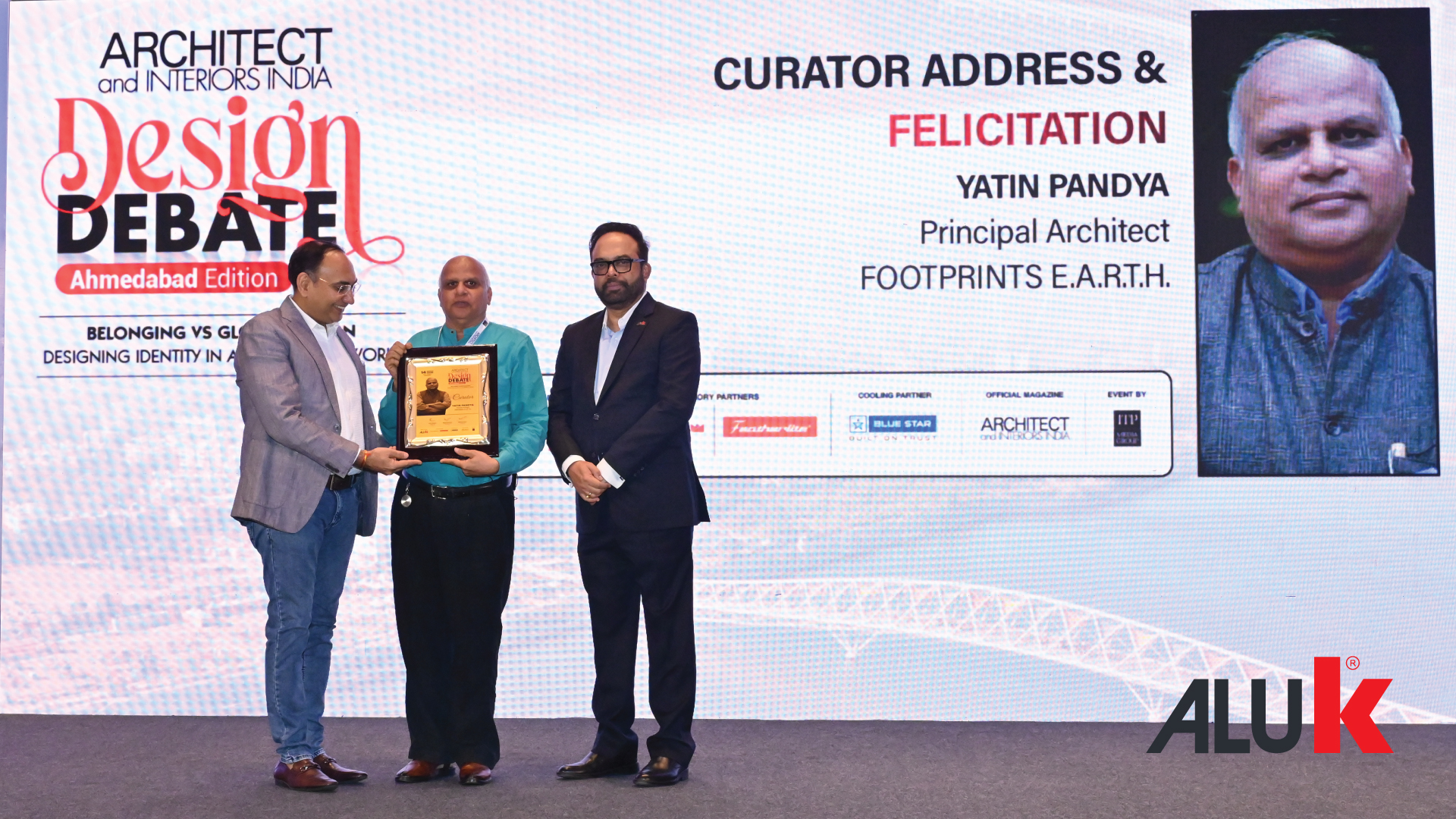
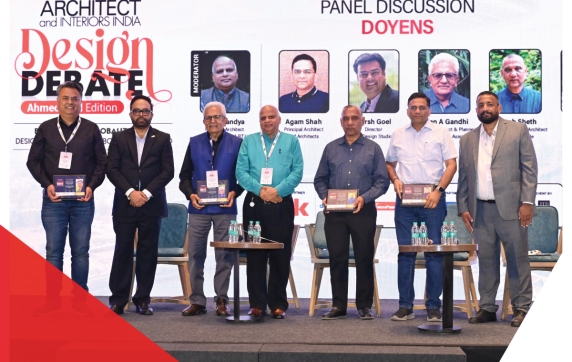
Anchoring the discourse, the Doyens Panel brought together senior architects whose work has significantly shaped the region’s built environment. The panel featured Hiren A. Gandhi, Principal Architect and Planner at Hiren A. Gandhi and Associates; Rajesh Sheth, Founder and Principal Architect at Designer’s Circle, Harsh Goel, Director at INI Design Studio, Agam Shah, Principal Architect at HM Architect and Vipul Patel Principal Architect, at Vipul Patel Architects (VPA), moderated by Mr. Yatin Pandya, Principal Architect at Footprints E.A.R.T.H
Drawing on decades of practice, the architects reflected on how regional identity in architecture emerges not merely from visual language but from deeper considerations, climatic responsiveness, construction traditions, and the cultural narratives embedded within urban landscapes. Their perspectives emphasized that in a globalized design culture, authenticity is increasingly defined by how well architecture engages with its environment rather than how closely it follows international trends.
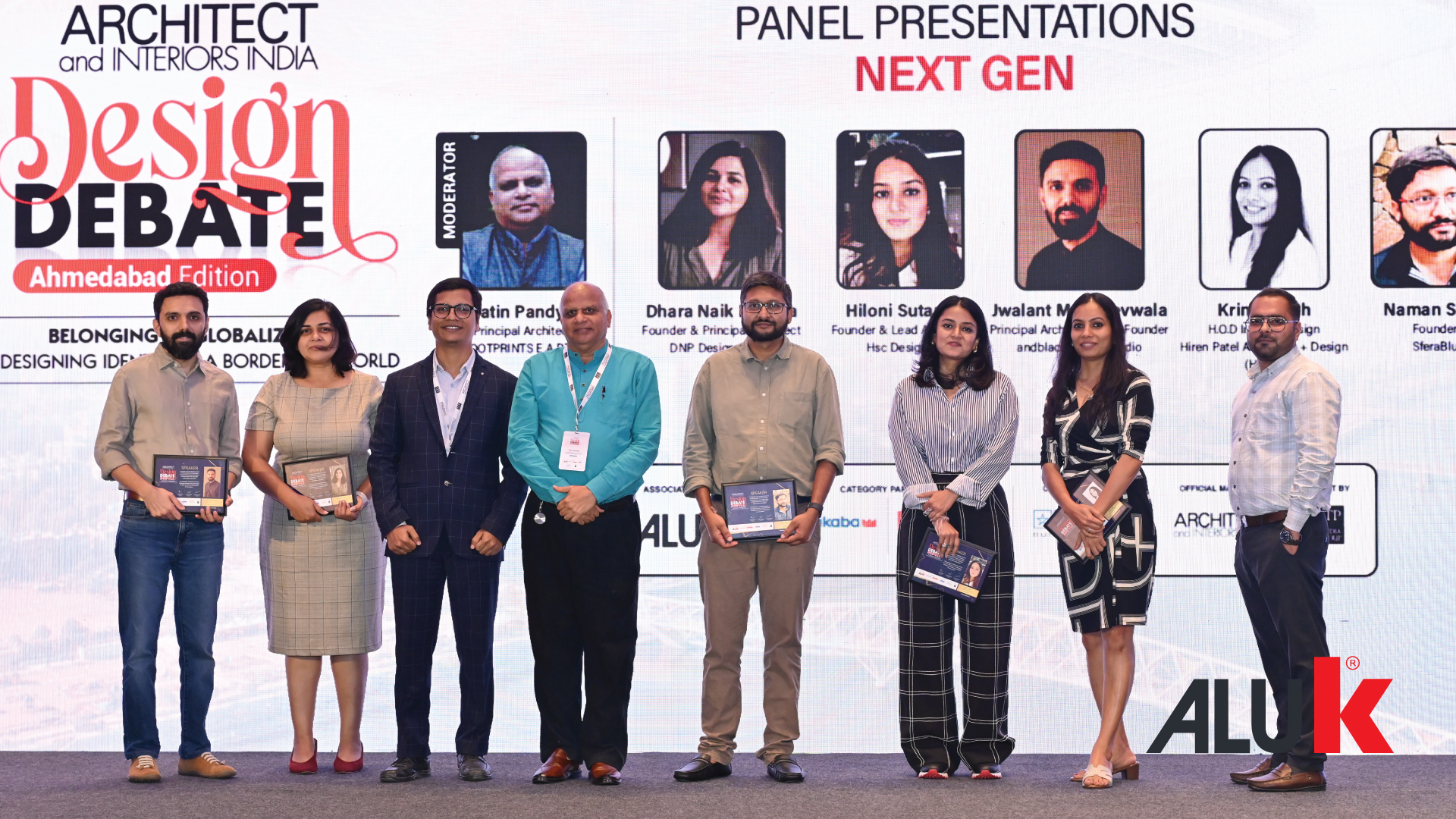
Complementing these insights, the Next-Gen Panel introduced a younger generation of architects navigating a design landscape shaped by global exposure and digital connectivity, moderated by Mr. Yatin Pandya, Principal Architect at Footprints E.A.R.T.H. The panel featured Hiloni Sutaria, Founder and Lead Architect at HSC Designs; Dhara Naik Pandya, Founder and Principal Architect DNP Design Studio; Jwalant Mahadevwala, Founding Partner and Principal Designer at ANDBLACK Design Studio; Krima Shah, H.O.D Interior Design, Hiren Patel Architects + Design (HPAD) and Naman Shah, Founder of SFERABLU.
Their discussion reflected a generation that views globalization not as a dilution of identity but as an opportunity to reinterpret it, using contemporary materials, digital design tools, and evolving spatial concepts to create architecture that remains rooted while speaking a global language.
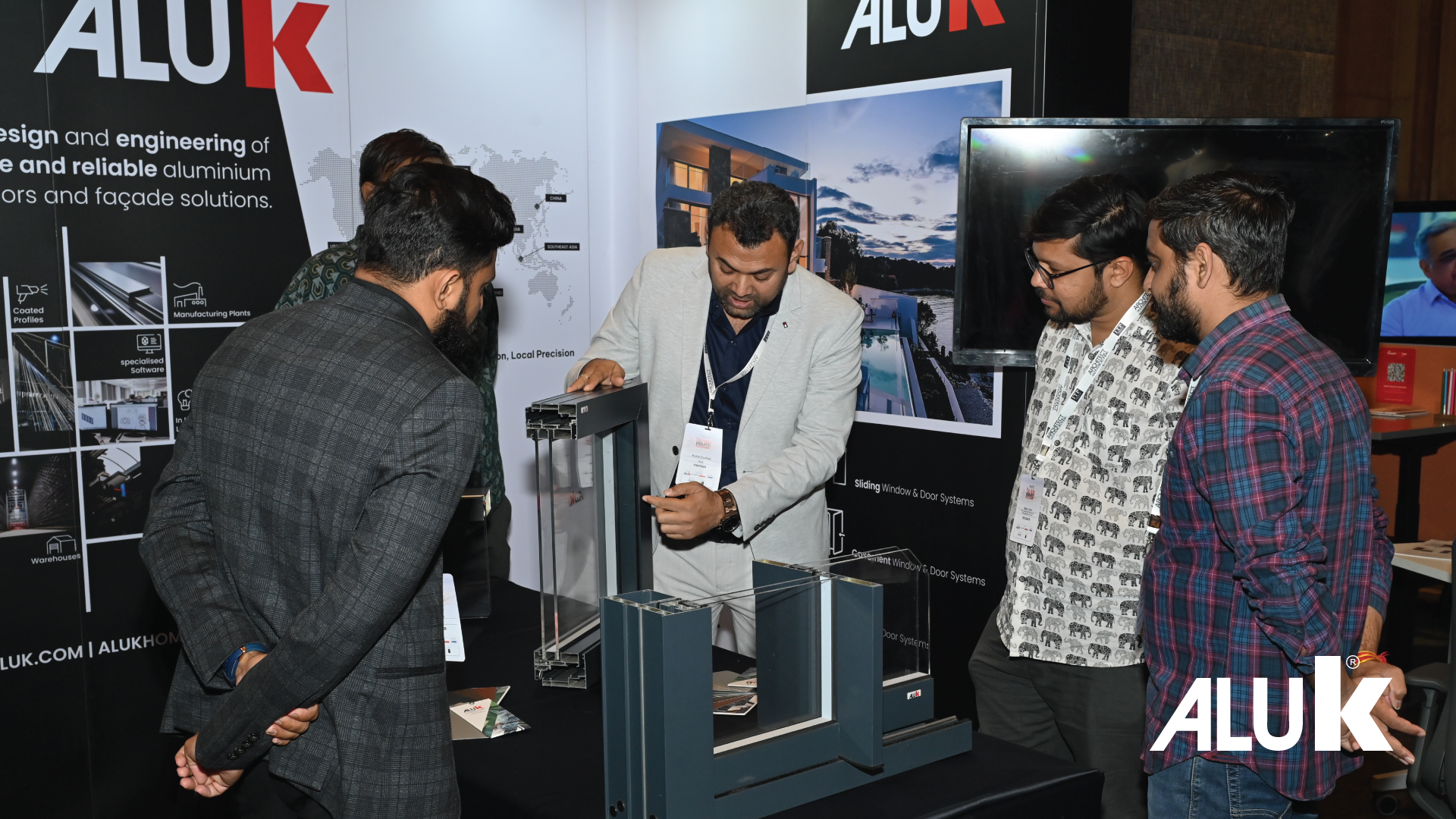
As partner to the debate series, AluK also presented its perspective on the role of high-performance system aluminium in shaping contemporary architecture. With buildings increasingly defined by larger openings, minimal sightlines, and high-performance façades, aluminium window and door systems are becoming integral to achieving both design flexibility and technical performance within modern building envelopes.
By engaging with the architectural community through forums such as the Architects & Interiors Design Debate, AluK continues to position itself within broader industry conversations around design evolution and building performance.
The Ahmedabad edition ultimately underscored a growing consensus within the profession: that architecture today must move beyond the binary of belonging versus globalization. Instead, the future of design may lie in synthesizing the two, creating buildings that embrace global innovation while remaining deeply responsive to the cultural and environmental contexts in which they stand.